Contents
- 1 How to Transpose Piano Sheet Music Easily
- 2 What Does Transposing Mean?
- 3 Method 1: Transpose by Intervals
- 4 Method 2: Use Scale Degrees
- 5 Method 3: Transpose Chords Instead of Individual Notes
- 6 Method 4: Use the Circle of Fifths
- 7 Practical Tips for Faster Transposing
- 8 Common Mistakes to Avoid
- 9 Final Thoughts
- 10 Frequently Asked Questions
How to Transpose Piano Sheet Music Easily
Transposing piano sheet music is an essential skill for pianists of all levels. Whether you want to match a singer’s vocal range, simplify a difficult key, or experiment with musical creativity, learning how to transpose can greatly improve your flexibility as a musician.
Fortunately, transposing music does not have to be complicated. With a few simple techniques and some practice, you can quickly move a piece from one key to another while keeping the melody and harmony intact.
What Does Transposing Mean?
In music, transposing means shifting every note in a piece up or down by the same interval. The structure of the music stays exactly the same, but the key changes.
For example:
- If a piece is in C Major and you transpose it up to D Major, every note moves up by two semitones.
- C note becomes D
- F becomes G
- G becomes A
The melody sounds the same, but it is played higher.
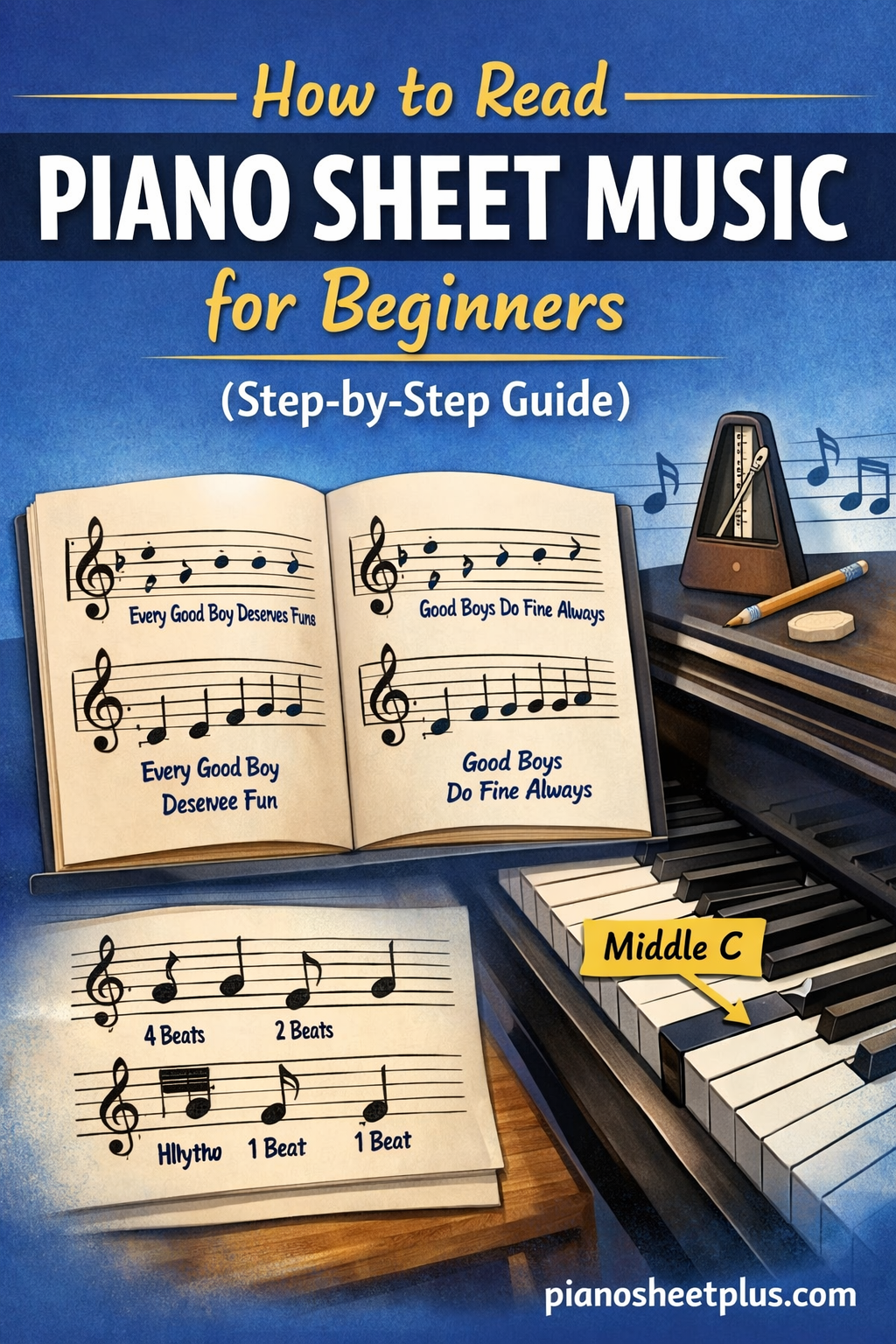
How to Read Piano Sheet Music for Beginners (Step-by-Step Guide)
Musicians often transpose music when:
- Accompanying singers with different vocal ranges
- Playing with instruments tuned in different keys
- Making a piece easier to play on piano
- Practicing music theory and ear training
Method 1: Transpose by Intervals
One of the most reliable ways to transpose sheet music is by moving every note by the same interval.
Step-by-step method
- Identify the original key of the piece.
- Choose the new key you want to move to.
- Determine the interval between the two keys.
- Move every note by that same interval.
Example
Original key: C Major
New key: G Major
Interval: Up a perfect fifth
So each note moves up a fifth:
| Original Note | Transposed Note |
|---|---|
| C | G |
| D | A |
| E | B |
| F | C |
| G | D |
This keeps the musical relationships exactly the same.
Method 2: Use Scale Degrees
Another simple approach is to think in scale degrees rather than note names.
In C Major:
| Scale Degree | Note |
|---|---|
| 1 | C |
| 2 | D |
| 3 | E |
| 4 | F |
| 5 | G |
| 6 | A |
| 7 | B |
If the melody starts with the pattern:
1 – 3 – 5 – 3
In C Major it becomes:
C – E – G – E
If you transpose to F Major, the same pattern becomes:
F – A – C – A
Because you are keeping the same scale positions.
This method is especially useful when playing by ear.
Method 3: Transpose Chords Instead of Individual Notes
If your sheet music includes chord symbols, transposing becomes much faster.
Example chord progression:
C – G – Am – F
If you transpose the piece up to D Major, every chord moves up one whole step:
D – A – Bm – G
This method is commonly used when accompanying singers or playing pop music.
How to Memorize Piano Sheet Music Faster (Step-by-Step Guide for Beginners)
Method 4: Use the Circle of Fifths
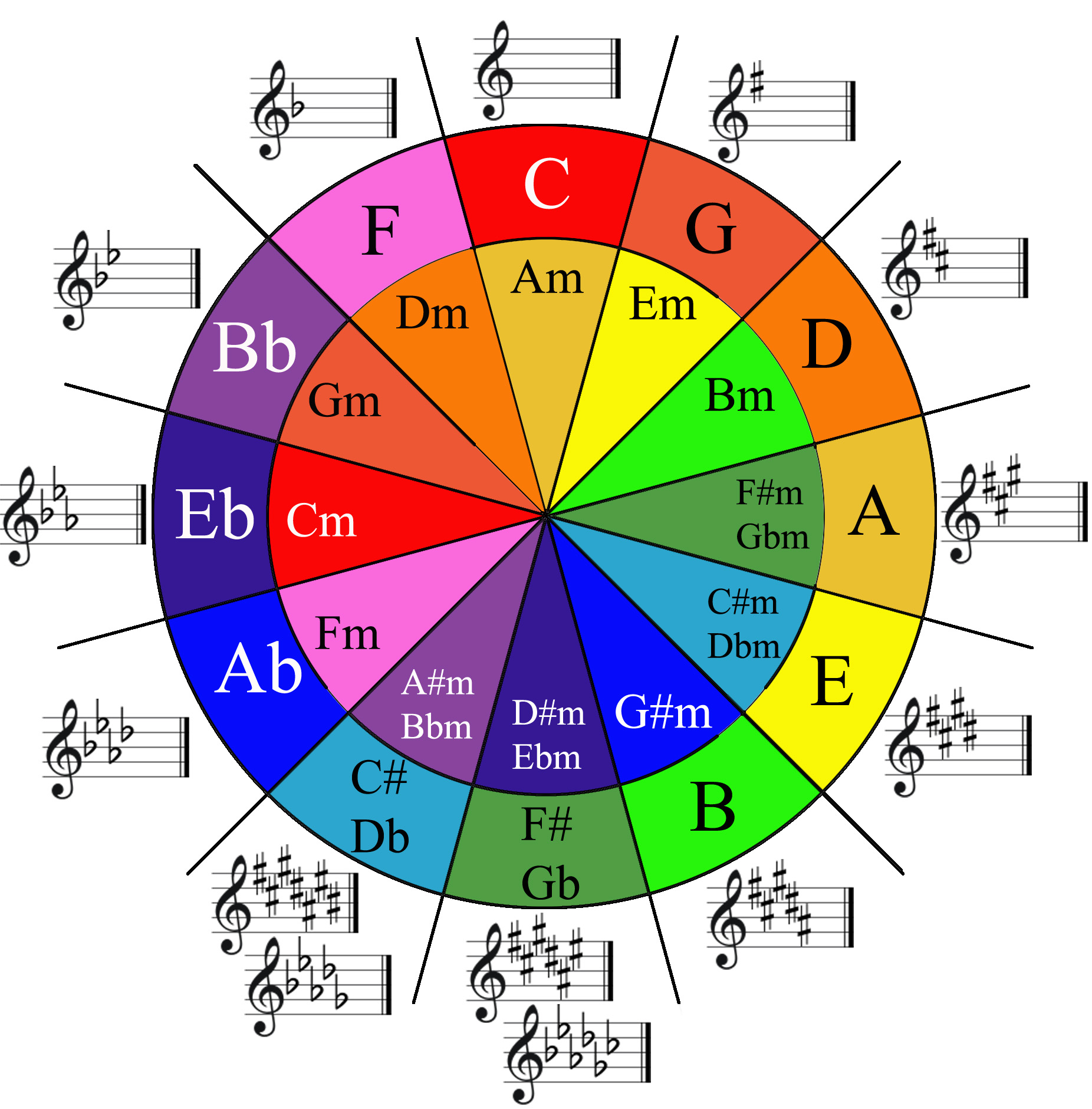
The circle of fifths is a powerful tool that helps you quickly understand key relationships.
Moving clockwise moves the key up a fifth, while moving counterclockwise moves it down a fifth.
For example:
C → G → D → A → E
Knowing this pattern helps you quickly predict accidentals when transposing.
Practical Tips for Faster Transposing
Practice with simple melodies
Start with easy songs like:
- Twinkle Twinkle Little Star
- Ode to Joy
- Happy Birthday
These melodies have simple patterns that are easy to shift between keys.
Learn your scales
The more comfortable you are with major and minor scales, the easier transposing becomes.
Think in patterns
Instead of reading every note individually, focus on:
- Intervals
- Chord shapes
- Scale movements
This makes transposing much faster.
Practice daily
Try taking a short melody and playing it in three different keys. Within a few weeks, your brain will start recognizing patterns automatically.
Common Mistakes to Avoid
1. Forgetting the key signature
Always check the new key’s sharps or flats.
2. Transposing melody but not chords
Both must shift together.
3. Moving notes inconsistently
Every note must move by the same interval.
4. Ignoring accidentals
Sharps and flats must also be adjusted when changing keys.
How to Practice Piano Using Sheet Music Effectively (Beginner Guide)
Final Thoughts
Learning how to transpose piano sheet music opens the door to greater musical freedom. You will be able to adapt songs for singers, explore different tonal colors, and strengthen your understanding of music theory.
At first, transposing may feel slow and challenging. But with consistent practice and a good understanding of intervals and scales, it becomes a natural and powerful skill for any pianist.
Frequently Asked Questions
1. What does transposing mean in piano music?
Transposing means changing the key of a piece of music by moving every note up or down by the same interval. The melody and harmony remain the same, but the pitch changes.
2. Why do pianists transpose sheet music?
Pianists often transpose music to match a singer’s vocal range, make a piece easier to play, or adapt the music for different instruments.
3. Is transposing difficult for beginners?
At first it may feel challenging, but beginners can learn it quickly by practicing simple melodies, understanding intervals, and becoming familiar with major scales.
4. What is the easiest way to transpose piano music?
The easiest methods include:
Moving notes by intervals
Using scale degrees
Transposing chord progressions
Using the circle of fifths
5. Do I need to know music theory to transpose?
Basic music theory helps, especially understanding scales, chords, and intervals. However, with practice, many pianists can learn to transpose by recognizing patterns.
6. Can I transpose piano music by ear?
Yes. Experienced musicians often transpose by ear by recognizing the melody’s interval patterns and reproducing them in another key.