
How to Choose Piano Sheet Music for Your Skill Level
Choosing the right piano sheet music can make a huge difference in how quickly and confidently you improve at the piano. Many beginners feel frustrated because they accidentally pick music that is far too difficult for their current level. On the other hand, music that is too easy may not help you grow as a musician.
The good news is that learning how to select the right piano sheet music is actually a skill you can develop. Once you understand how to evaluate difficulty levels, read musical patterns, and recognize beginner-friendly arrangements, you will be able to choose pieces that are both enjoyable and productive for your practice.
In this guide, I’ll walk you through exactly how to choose piano sheet music that matches your skill level. Whether you’re a beginner learning your first notes or an intermediate player expanding your repertoire, these tips will help you practice smarter and enjoy the learning process even more.
Contents
- 1 Why Choosing the Right Piano Sheet Music Matters
- 2 Understanding Piano Sheet Music Difficulty Levels
- 3 How to Quickly Evaluate Piano Sheet Music
- 4 Beginner Practice Tips for Learning New Sheet Music
- 5 Explore More Piano Sheet Music
- 6 Frequently Asked Questions
- 6.1 How do I know if piano sheet music is too difficult for me?
- 6.2 What level of piano sheet music should beginners start with?
- 6.3 Is it okay to practice music that is slightly above my level?
- 6.4 How long should beginners practice piano sheet music each day?
- 6.5 Where can I find free printable piano sheet music?
- 7 Conclusion
Why Choosing the Right Piano Sheet Music Matters
As a piano teacher, I often tell students that progress at the piano is like climbing a staircase. Each piece of sheet music should represent the next step — not a giant leap.
If the music is too difficult, students often experience:
- Frustration and slow progress
- Incorrect finger habits
- Difficulty reading the notes
- Loss of motivation
When you choose music that matches your current ability, practice becomes much more enjoyable. You build confidence, develop stronger reading skills, and gradually increase your technical ability.
Understanding Piano Sheet Music Difficulty Levels
Piano sheet music is typically categorized into several skill levels. Knowing what these levels mean will help you quickly identify which pieces are appropriate for you.
Beginner Piano Sheet Music
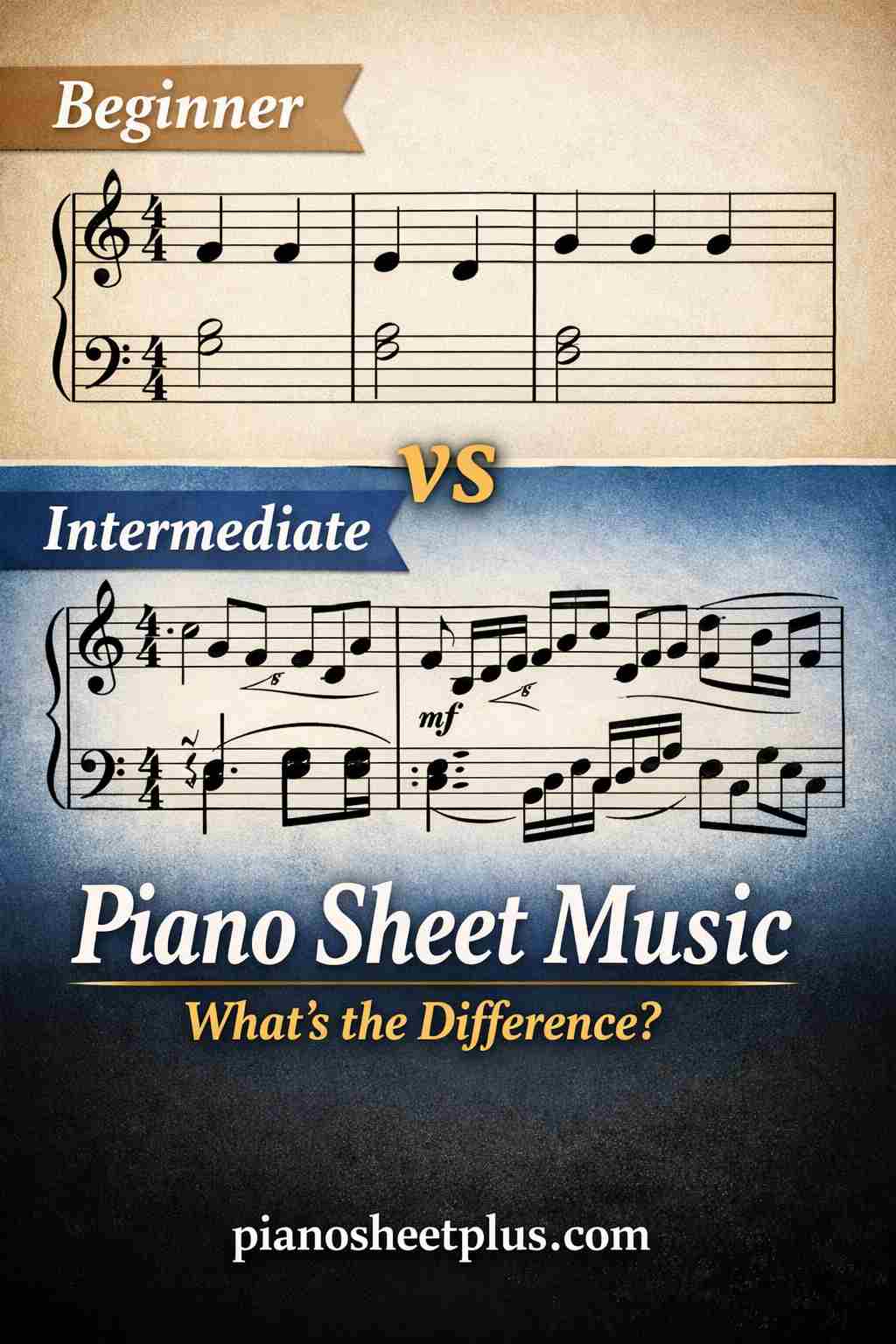
Beginner sheet music is designed for players who are still learning basic music reading and simple hand coordination.
- Simple rhythms
- Limited hand movement
- Few accidentals
- Mostly five-finger positions
- Slower tempos
These pieces are perfect for building confidence while developing fundamental piano skills.
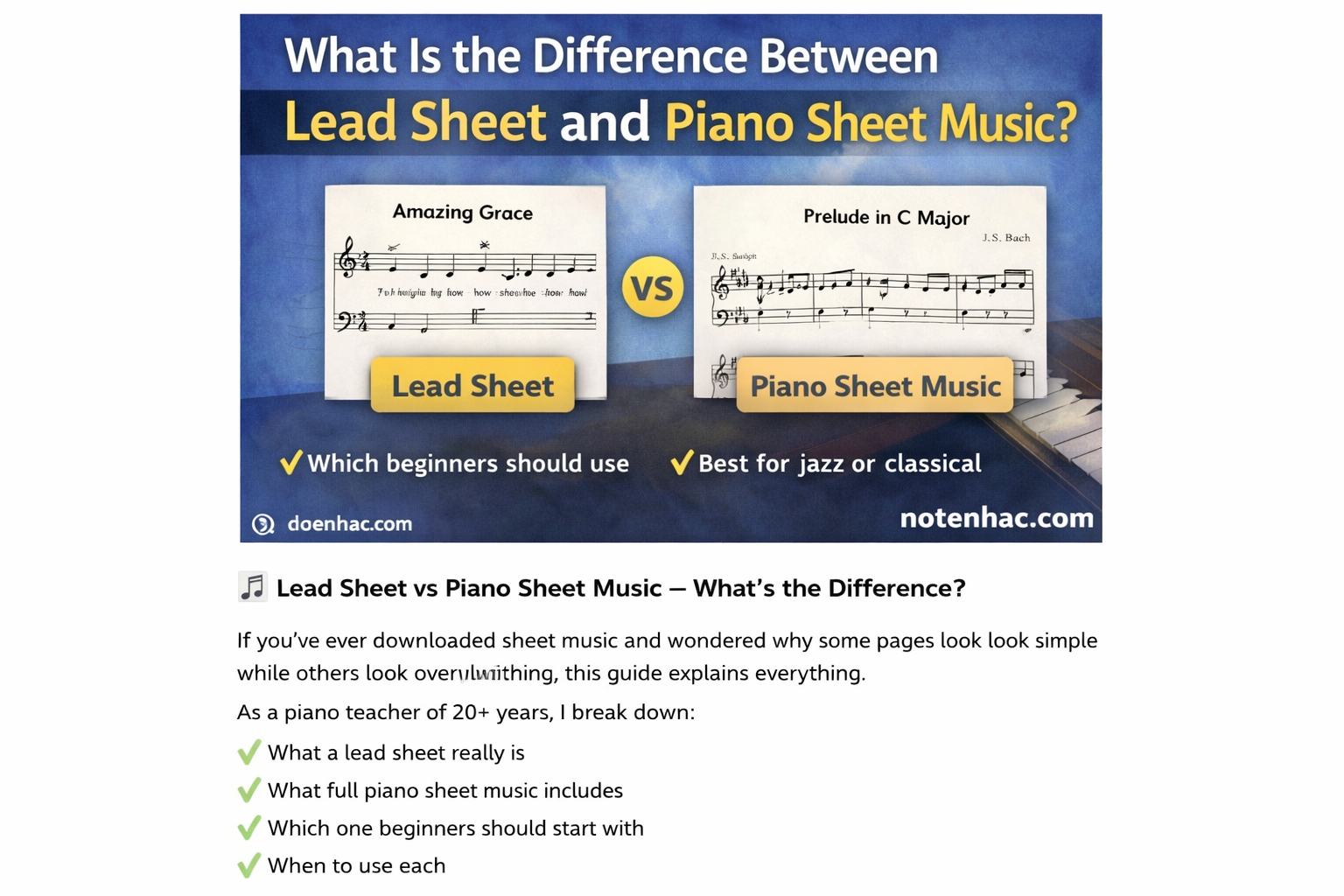
Beginner vs Intermediate Piano Sheet Music – What’s the Difference?
Late Beginner / Early Intermediate Music
Once you become comfortable reading notes and playing with both hands, you can move to slightly more complex pieces.
At this level you may see:
- More hand movement across the keyboard
- More varied rhythms
- Dynamic markings
- Simple chord patterns
- Faster tempos
This level is where piano playing starts to feel more expressive and musical.
Intermediate Piano Sheet Music
Intermediate pieces require stronger coordination, better rhythm control, and more developed reading skills.
Common characteristics include:
- Full chord progressions
- Wider hand stretches
- More complex rhythms
- Faster passages
- Greater musical expression
Many famous classical and popular piano arrangements fall into this category.
How to Quickly Evaluate Piano Sheet Music
Before starting a new piece, it’s helpful to scan the sheet music and look for clues about its difficulty.
Check the Key Signature
Pieces with many sharps or flats are usually more challenging for beginners. If you’re still learning note reading, start with pieces in simple keys like C major or G major.
Look at the Rhythm Patterns
Simple rhythms using quarter notes and half notes are beginner-friendly. If you see many sixteenth notes or syncopated rhythms, the piece may be more advanced.
Observe Hand Movement
If the hands stay mostly in one position, the piece is likely easier. Large jumps or wide chord stretches usually indicate higher difficulty.
Beginner Practice Tips for Learning New Sheet Music
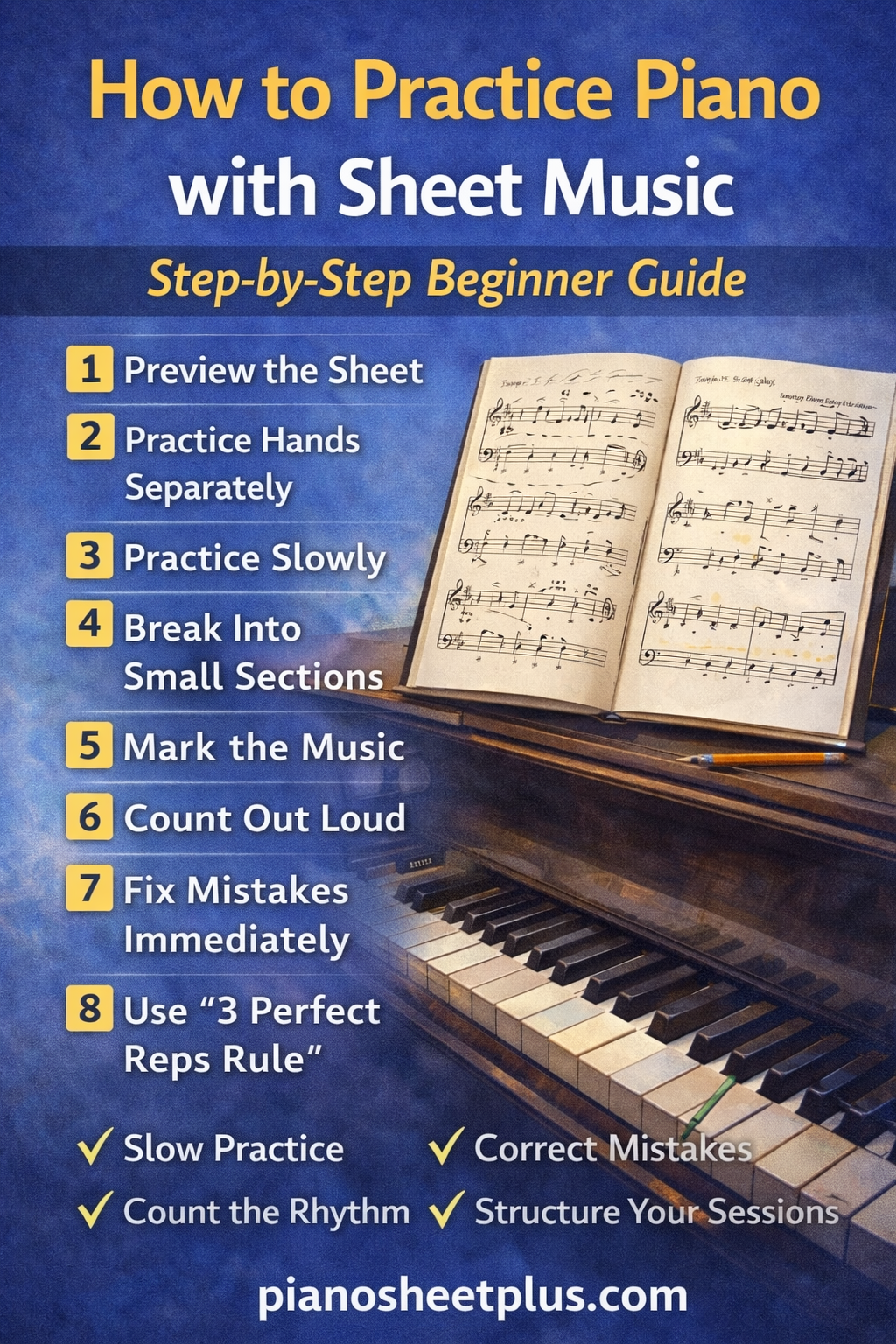
Once you’ve chosen the right piece, practicing effectively becomes the key to success. These tips are techniques I regularly teach my piano students.
- Practice slowly before increasing speed
- Use a metronome to improve timing
- Break difficult passages into smaller sections
- Practice hands separately first
- Listen to recordings of the piece
Consistency is far more important than long practice sessions. Even 15–20 minutes of focused practice each day can lead to steady improvement.
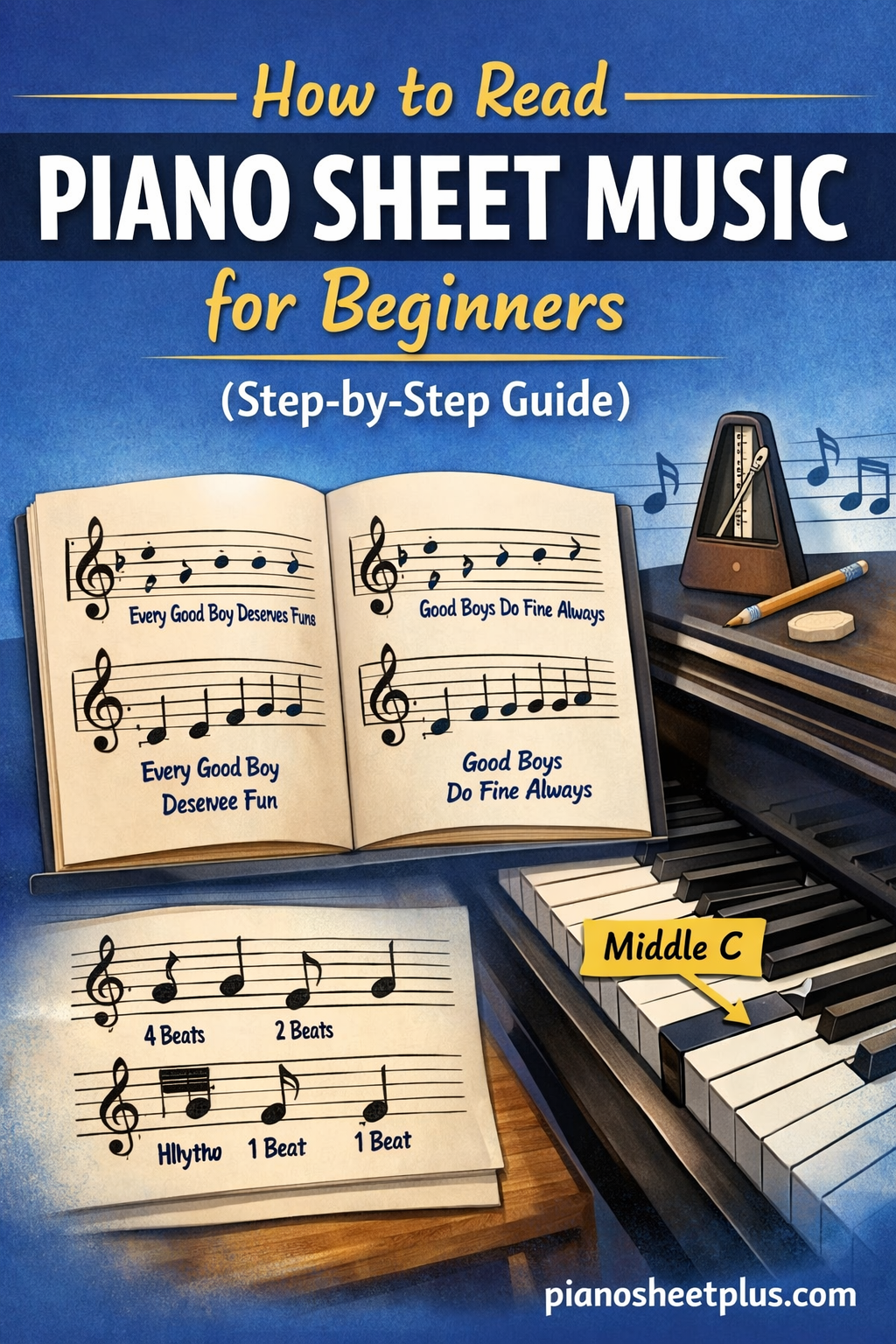
How to Read Piano Sheet Music for Beginners (Step-by-Step Guide)
Explore More Piano Sheet Music
If you’re looking for more music to practice, exploring a variety of sheet music can keep your learning exciting and motivating.
You can browse a large collection of beginner-friendly pieces here:
Or discover popular beginner repertoire:
Easy piano songs for beginners
Practicing with a variety of music helps develop stronger reading skills and keeps practice sessions fresh and enjoyable.
Frequently Asked Questions
How do I know if piano sheet music is too difficult for me?
If you cannot play most of the notes slowly after several practice attempts, the piece may be too advanced. A good rule is that you should be able to read about 70% of the music comfortably.
What level of piano sheet music should beginners start with?
Beginners should start with simple five-finger position pieces in easy keys such as C major. These pieces focus on basic rhythms and hand coordination.
Is it okay to practice music that is slightly above my level?
Yes, a small challenge is helpful for growth. Just make sure the piece is not so difficult that it becomes frustrating or discouraging.
How long should beginners practice piano sheet music each day?
Most beginners benefit from practicing 15–30 minutes per day. Short, consistent practice sessions are more effective than occasional long sessions.
Where can I find free printable piano sheet music?
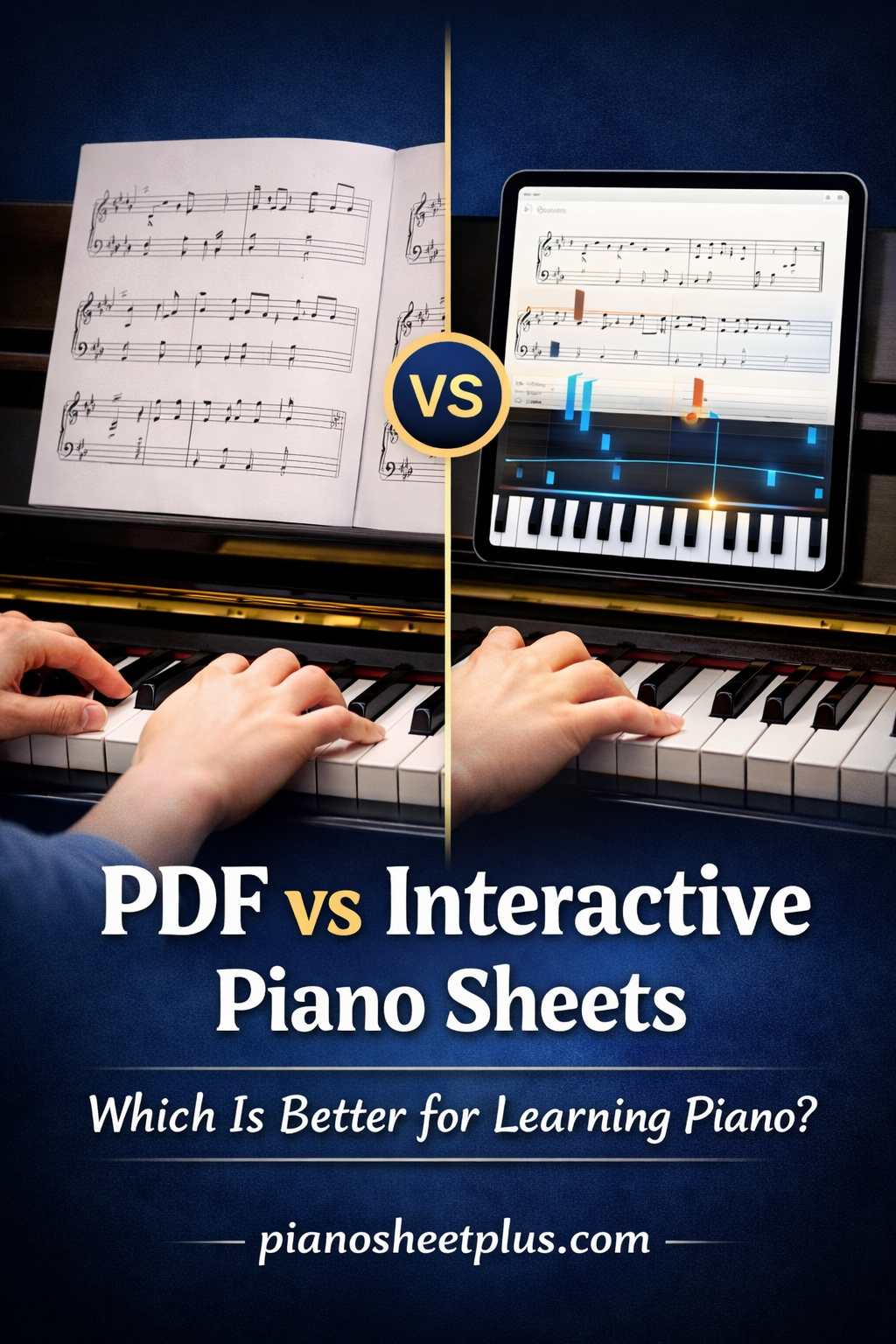
You can explore many beginner and intermediate pieces on websites that offer downloadable PDFs. Printable sheet music makes it easy to practice anytime without needing an internet connection.
Conclusion
Choosing the right piano sheet music is one of the most important steps in becoming a confident piano player. When you select music that matches your current skill level, practice becomes more enjoyable and progress happens naturally.
Take your time exploring new pieces, practice patiently, and gradually challenge yourself with slightly more advanced music. With the right sheet music and consistent practice, your piano skills will grow faster than you might expect.
Ready to start practicing? Browse our collection of free piano sheet music and discover your next favorite piece today.