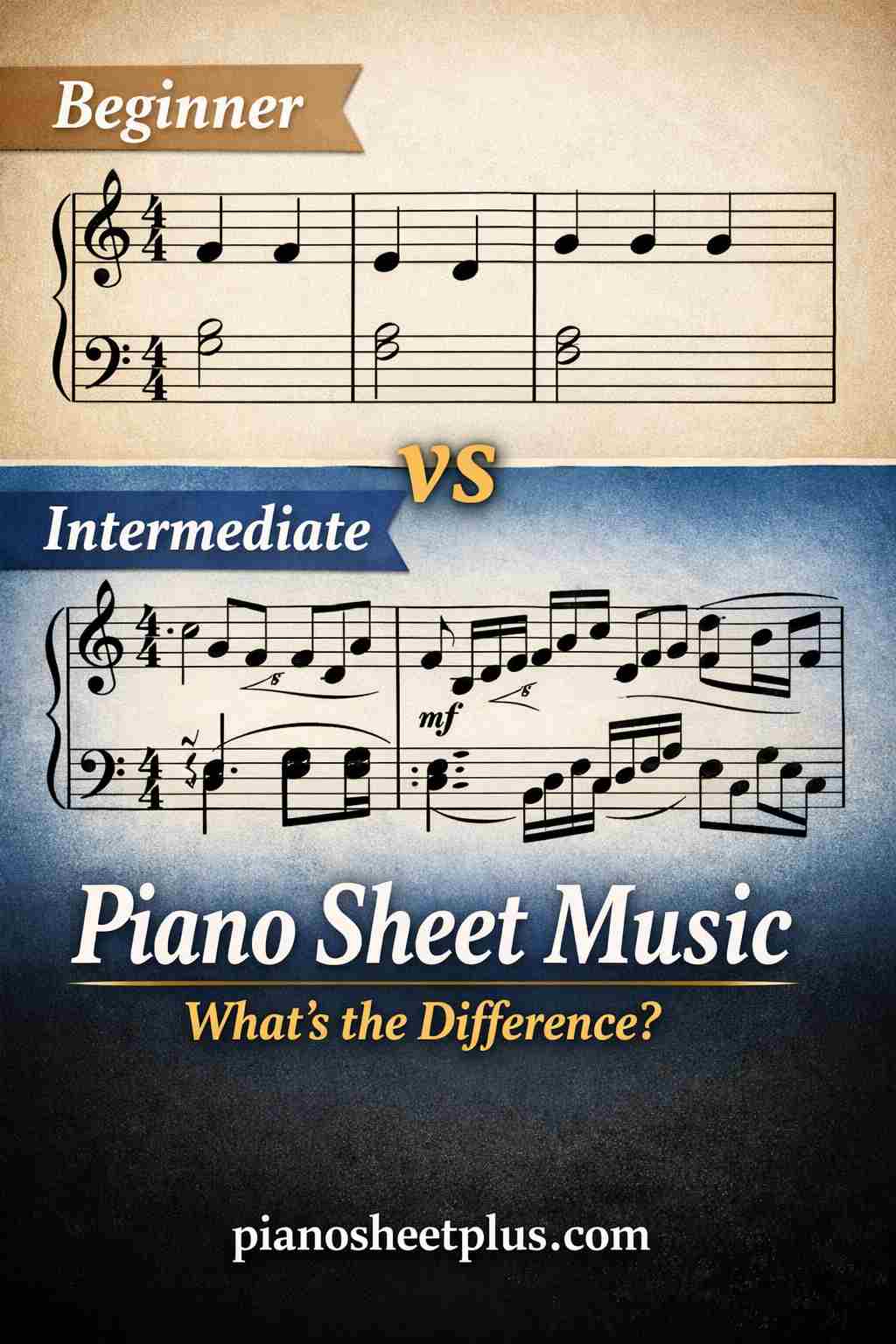
If you’re learning piano, you’ve probably seen sheet music labeled beginner, easy, or intermediate. But what do these levels really mean? Understanding the difference between beginner and intermediate piano sheet music can make a big difference in how smoothly your learning journey goes.
As a piano teacher with more than 20 years of experience, I’ve seen many students struggle simply because they chose music that was either too easy or far too difficult. The right level of sheet music helps you build confidence, develop technique, and actually enjoy practicing.
In this guide, I’ll explain the key differences between beginner and intermediate piano sheet music, how to recognize each level, and how to choose pieces that help you progress naturally. If you’re looking for music to practice, you can also explore our collection of Free piano sheet music designed specifically for developing pianists.
What Is Beginner Piano Sheet Music?
Beginner piano sheet music is designed for players who are just starting to learn how to read music and coordinate both hands on the keyboard. The main goal at this stage is to build fundamental skills without overwhelming the student.
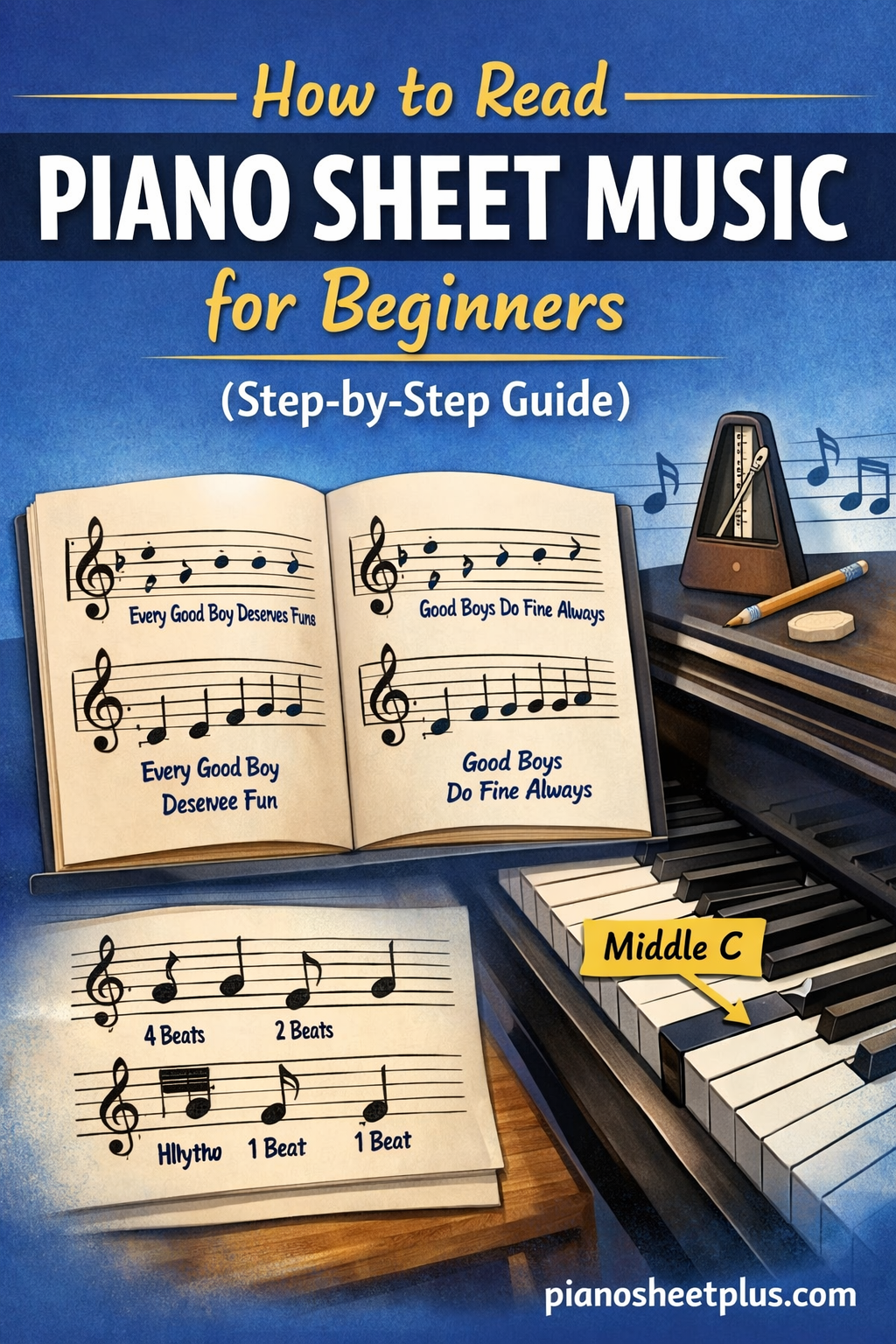
How to Read Piano Sheet Music for Beginners (Step-by-Step Guide)
Characteristics of Beginner Piano Music
- Simple melodies with small hand movements
- Mostly quarter notes, half notes, and whole notes
- Limited use of chords
- Hands often play separately or in simple patterns
- Slow to moderate tempo
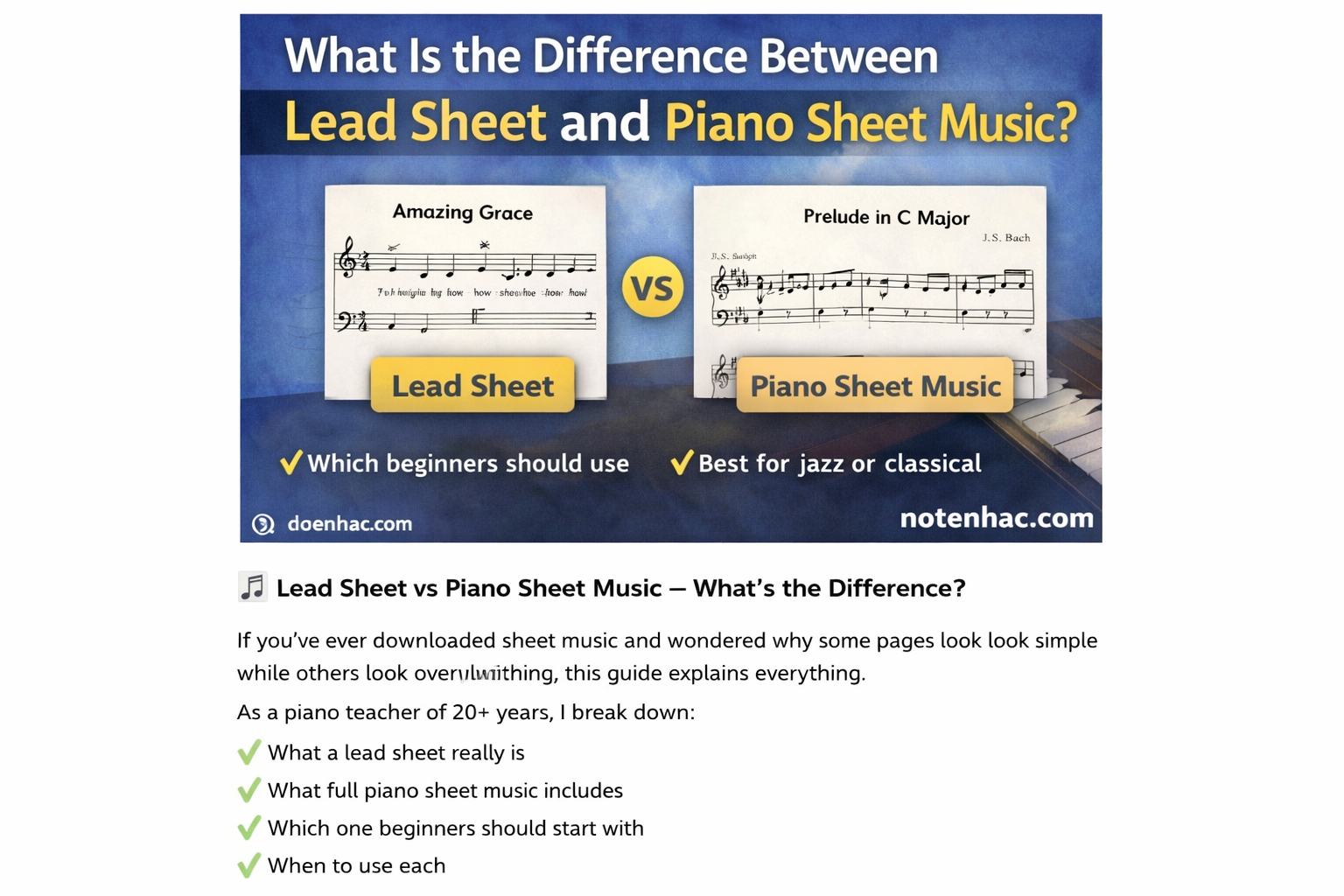
In many beginner pieces, the right hand plays the melody while the left hand plays single bass notes or very simple chords. This allows new pianists to focus on reading notes and developing rhythm.
Many students start with familiar tunes because they’re easier to recognize while playing. If you’re just beginning, check out our collection of Easy piano songs for beginners to build confidence at the keyboard.
What Is Intermediate Piano Sheet Music?
Intermediate piano sheet music is the next step once a player becomes comfortable reading music and coordinating both hands. At this level, the music becomes more expressive and technically demanding.
The goal of intermediate pieces is to expand your musical skills while introducing more complex rhythms, chords, and hand movements.
Characteristics of Intermediate Piano Music
- More complex rhythms such as eighth notes and syncopation
- Wider hand movement across the keyboard
- Use of chords and chord progressions
- Both hands playing more independent parts
- Dynamic markings and expressive phrasing
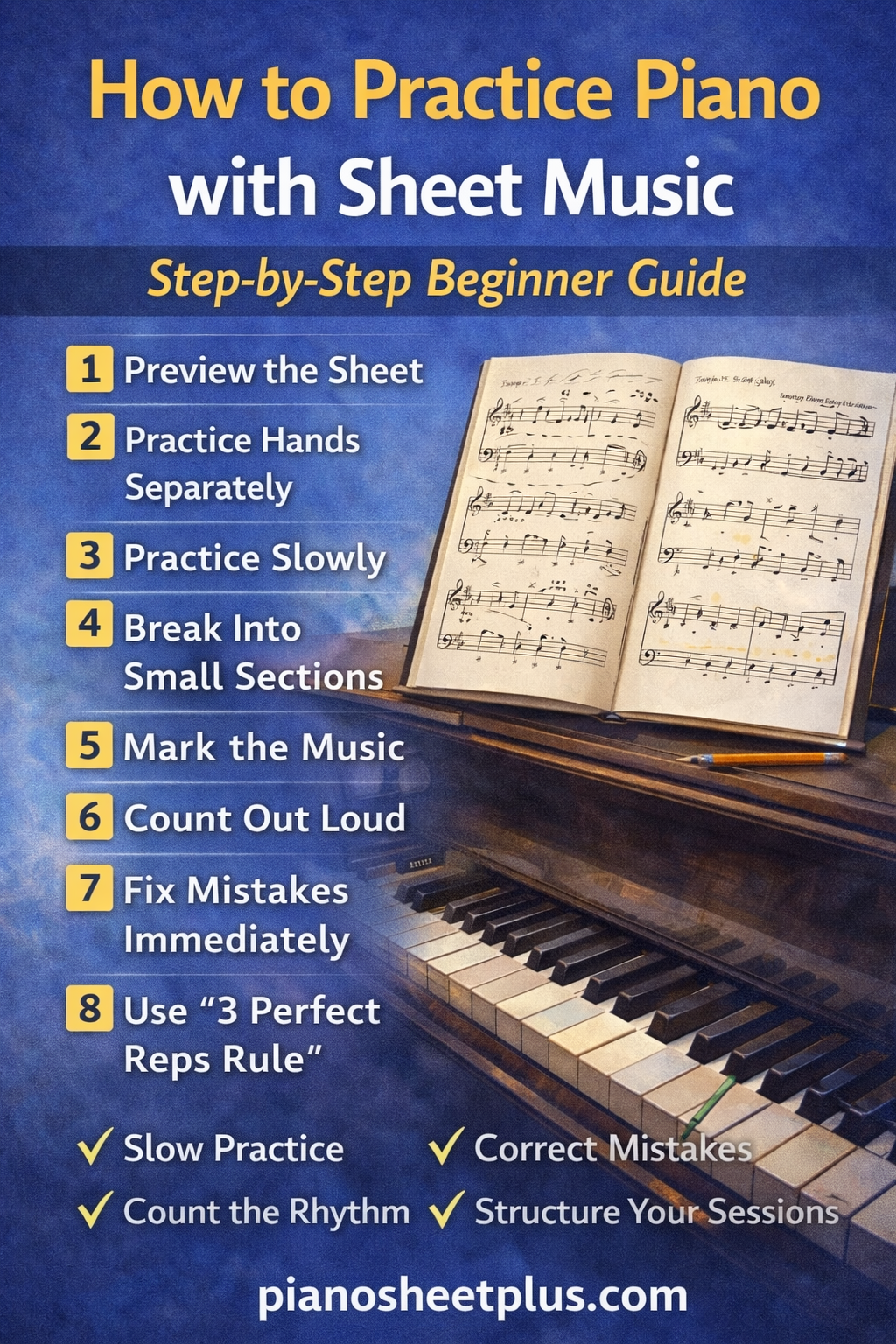
How to Practice Piano with Sheet Music (Step-by-Step Guide for Real Progress)
Intermediate music also begins to introduce musical interpretation. Players start thinking about phrasing, dynamics, and emotional expression, not just playing the correct notes.
This is the stage where piano playing starts to feel more musical and rewarding.
Key Differences Between Beginner and Intermediate Piano Sheet Music
While both levels focus on developing piano skills, the complexity of the music increases significantly between beginner and intermediate stages.
1. Rhythm Complexity
Beginner pieces use simple rhythms that are easy to count. Intermediate music often includes faster note values, syncopation, and rhythm patterns that require more control.
2. Hand Coordination
In beginner music, the hands often move together or follow predictable patterns. Intermediate pieces require greater independence between the hands, which can be challenging but also very rewarding.
3. Range on the Keyboard
Beginner pieces usually stay within a small range of the keyboard. Intermediate pieces often require moving across several octaves, which improves spatial awareness at the piano.
4. Musical Expression
Intermediate sheet music includes more expressive markings such as crescendos, accents, and phrasing. These markings help pianists develop musical sensitivity.
How to Know If a Piece Is Too Difficult
Choosing music that matches your skill level is extremely important. If a piece is too difficult, practice becomes frustrating instead of enjoyable.
Here are a few signs that a piece might be above your current level:
- You struggle to read the notes quickly
- Your hands feel constantly tense while playing
- You cannot maintain a steady rhythm
- You spend days learning only a few measures
If this happens, it’s perfectly okay to step back and choose something slightly easier. Progress at the piano is much faster when you build skills gradually.
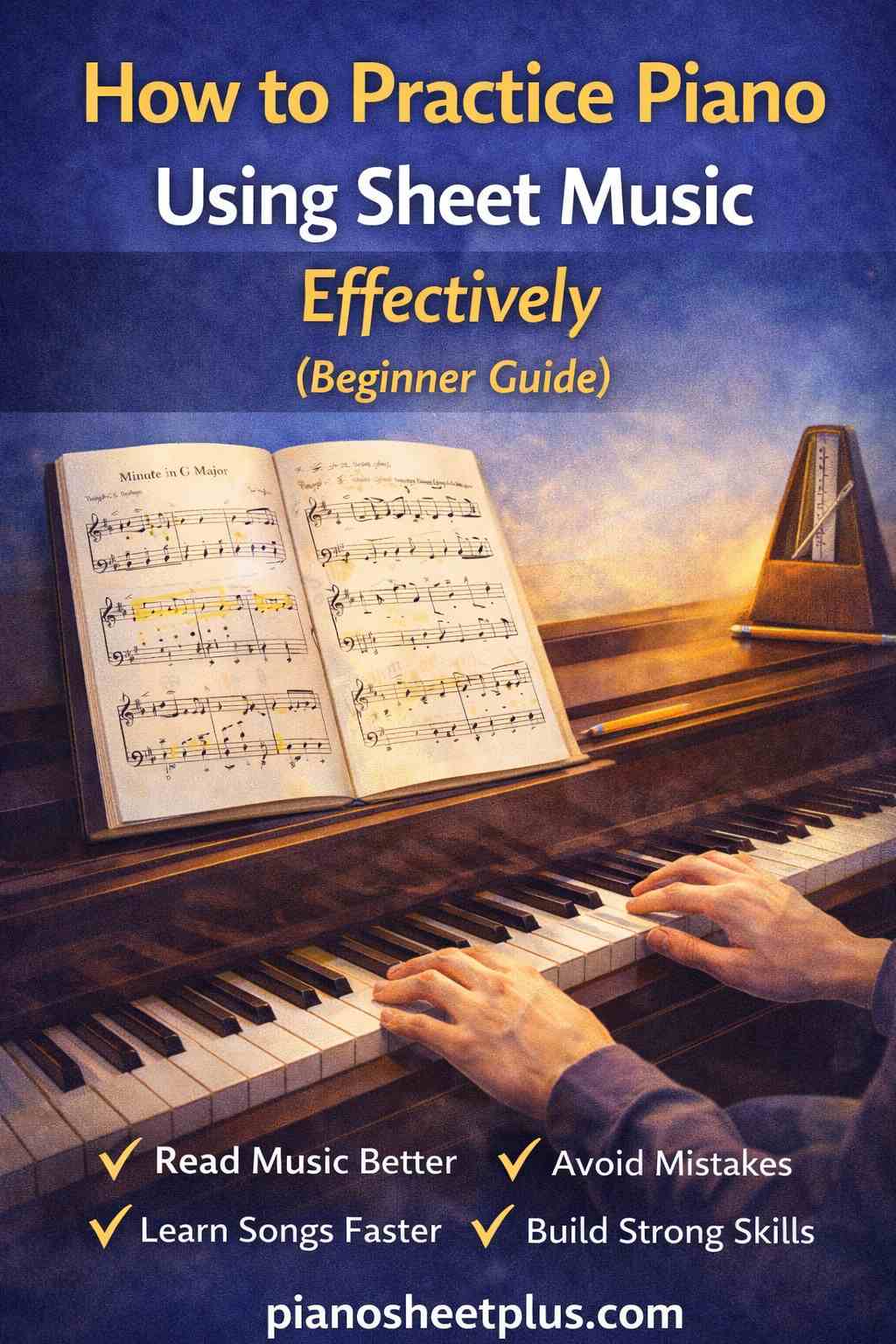
How to Practice Piano Using Sheet Music Effectively (Beginner Guide)
Where to Find Beginner and Intermediate Piano Sheet Music
One of the best ways to improve your piano playing is to explore a wide variety of music at the right level. Practicing different styles keeps learning interesting and develops stronger musical skills.
On our site, you can explore a large library of Printable piano sheet music PDF that you can download and practice anytime.
Whether you’re just starting or moving into intermediate repertoire, practicing with well-arranged sheet music helps you grow steadily as a pianist.
Browse our full collection here: Free piano sheet music
Beginner Practice Tips
No matter what level you’re at, good practice habits will help you improve much faster. Here are some simple tips I often give my piano students:
- Practice slowly before increasing speed
- Use a metronome to improve timing
- Break difficult passages into smaller sections
- Practice hands separately first
- Listen to recordings of the piece
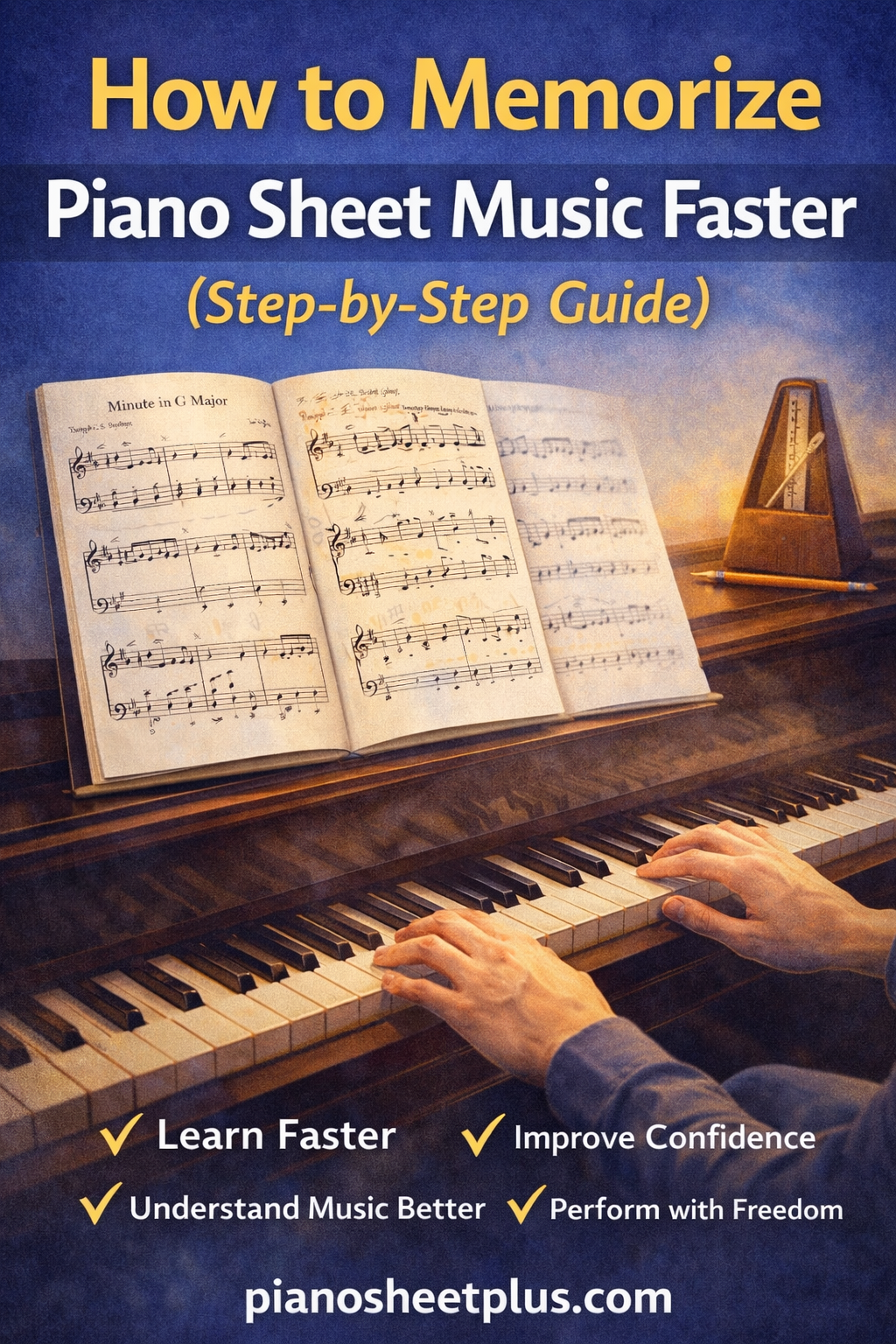
How to Memorize Piano Sheet Music Faster (Step-by-Step Guide for Beginners)
Even intermediate pianists benefit from these simple techniques. Consistent, focused practice always leads to better results than rushing through difficult music.
Frequently Asked Questions
What level is beginner piano sheet music?
Beginner piano sheet music is designed for new players who are learning to read notes and coordinate both hands. The music typically uses simple rhythms, limited hand movement, and basic melodies.
How long does it take to reach intermediate piano level?
For most students, reaching the intermediate level takes about one to three years of regular practice. Progress depends on practice consistency, learning methods, and the difficulty of the music studied.
Can beginners play intermediate piano songs?
Some motivated beginners can learn simplified intermediate pieces, but jumping too far ahead can slow progress. It’s usually better to master beginner music first before moving up in difficulty.
What is the easiest piano sheet music for beginners?
The easiest piano music typically uses simple melodies, basic rhythms, and small hand movements. Folk songs, nursery rhymes, and simple pop arrangements are great starting points.
Where can I download free piano sheet music?
You can explore a wide collection of downloadable music in our library of Free piano sheet music. Many pieces are available as printable PDFs for convenient practice.
Explore More Piano Resources
- Free piano sheet music
- Beginner piano songs
- Easy piano sheet music
- Printable piano sheet music PDF
- Piano practice guide
Conclusion
Understanding the difference between beginner and intermediate piano sheet music can help you choose pieces that match your current skills and keep your progress steady.
The best way to improve at piano is to practice music that challenges you just enough without becoming overwhelming. With the right sheet music and consistent practice, your playing will grow naturally over time.
Take some time to explore our collection of free piano sheet music and discover new pieces that inspire you to keep learning and enjoying the piano.