After more than 20 years of teaching piano, I can tell you this:
Most students don’t struggle because they lack talent.
They struggle because they don’t know how to practice with sheet music correctly.
Simply playing a piece from start to finish over and over is not practice — it’s repetition.
In this guide, I’ll show you the exact step-by-step method I teach my students to turn sheet music into confident, polished playing.
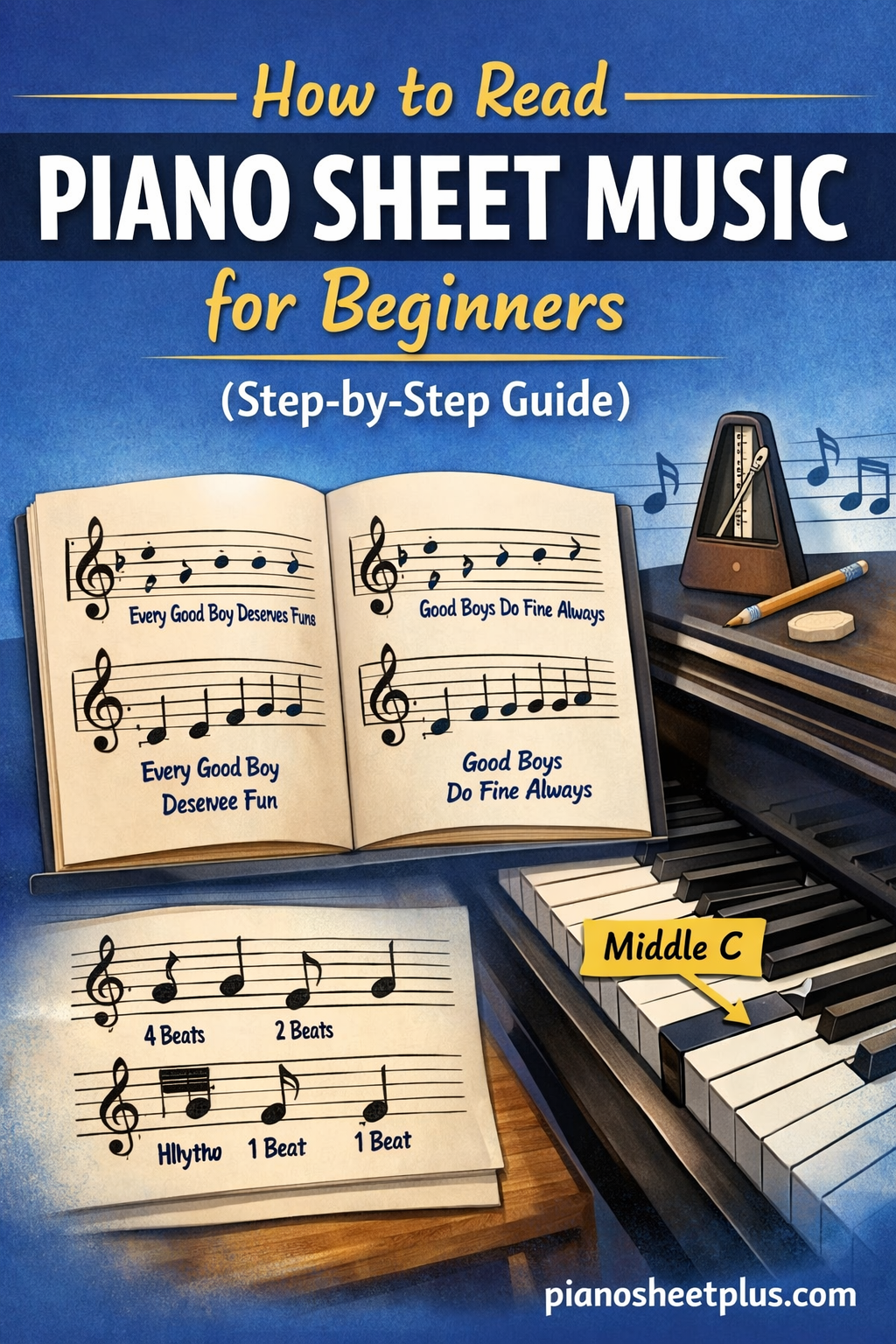
How to Read Piano Sheet Music for Beginners (Step-by-Step Guide)
Contents
- 1 Why Practicing with Sheet Music Feels Hard
- 2 Step 1: Preview the Sheet Before Playing
- 3 Step 2: Practice Hands Separately First
- 4 Step 3: Practice Slowly (Slower Than You Think)
- 5 Step 4: Break the Music into Small Sections
- 6 Step 5: Mark the Sheet Music
- 7 🎼 Same title: How to Practice Piano with Sheet Music (Step
- 8 Step 6: Count Out Loud
- 9 Step 7: Fix Mistakes Immediately
- 10 Step 8: Use the “3 Perfect Repetitions Rule”
- 11 Step 9: Add Musical Expression Last
- 12 Common Mistakes When Practicing with Sheet Music
- 13 How Long Should You Practice?
- 14 Should You Memorize or Read?
- 15 Final Advice from a Long-Time Piano Teacher
- 16 FAQ Section (Rich Results Ready)
Why Practicing with Sheet Music Feels Hard
When beginners open a new piece, they must process:
- Notes
- Rhythm
- Hand coordination
- Dynamics
- Fingering
- Articulation
That’s a lot for the brain at once.
The solution? Break it into stages.
Step 1: Preview the Sheet Before Playing
Before touching the keys, look at the page like a musician.
Ask yourself:
- What key signature is it in?
- What is the time signature?
- Are there repeating patterns?
- Any accidentals?
- Hands together or separate passages?
This takes 60–90 seconds and saves 10 minutes of frustration.
👉 This is one of the habits I drill into every beginner.
Step 2: Practice Hands Separately First
Unless the piece is extremely simple, start hands alone.
Right Hand:
- Focus on melody accuracy
- Observe rhythm carefully
- Follow fingering strictly
Left Hand:
- Watch for leaps
- Keep rhythm steady
- Don’t rush
When each hand feels comfortable, combine them slowly.
Step 3: Practice Slowly (Slower Than You Think)
This is where most students resist.
If you cannot play it slowly without mistakes,
you cannot play it fast correctly.
Use a metronome if possible.
A good rule:
Practice at a tempo where you make zero mistakes for one full section.
Speed comes later.
Step 4: Break the Music into Small Sections
Never practice the whole piece repeatedly.
Instead:
- Practice 2–4 measures at a time
- Repeat until clean
- Connect sections gradually
I call this the “Lego method.”
Build small blocks. Then connect them.
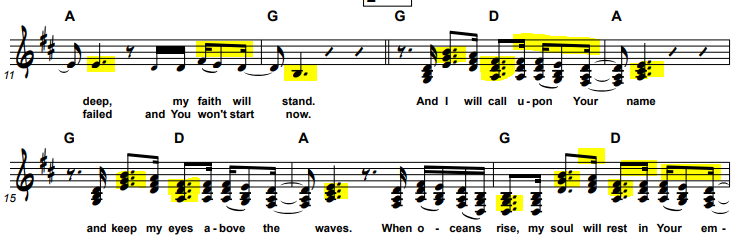
Step 5: Mark the Sheet Music
Professional musicians write on their sheet music.
Mark:
- Difficult measures
- Fingering reminders
- Dynamic changes
- Counting notes
- Accidentals
Your sheet music is a working document — not a museum artifact.
Step 6: Count Out Loud
Rhythm errors are more common than note errors.
Count:
- “1 and 2 and 3 and 4 and”
- Or subdivide in difficult passages
If you can’t count it, you don’t fully understand it.
Step 7: Fix Mistakes Immediately
When you hit a mistake:
❌ Don’t continue
❌ Don’t ignore it
Instead:
- Stop
- Find the problem
- Play it correctly 3–5 times
- Continue
This prevents muscle memory errors.
Step 8: Use the “3 Perfect Repetitions Rule”
Before moving on:
Play the section correctly 3 times in a row.
Not once.
Three clean repetitions.
Consistency builds confidence.
Step 9: Add Musical Expression Last
Only after notes and rhythm are secure:
- Add dynamics
- Shape phrases
- Adjust touch
- Add pedal (if needed)
Technique first. Expression second.
Common Mistakes When Practicing with Sheet Music
As a teacher, I see these constantly:
- Playing too fast too early
- Practicing from the beginning only
- Ignoring fingering
- Skipping rhythm counting
- Never isolating difficult measures
Avoid these, and your progress doubles.
How Long Should You Practice?
For beginners:
15–30 minutes daily is ideal.
Structure example:
5 minutes – warm up
10 minutes – new section practice
10 minutes – review older piece
5 minutes – play through for enjoyment
Consistency beats long, inconsistent sessions.
Should You Memorize or Read?
Early on, focus on reading.
Memorization will happen naturally over time.
Strong reading skills allow you to:
Learn new music faster
Play more repertoire
Avoid dependence on memory
Final Advice from a Long-Time Piano Teacher
Sheet music is not something to “get through.”
It is something to study, understand, and interpret.
When practiced properly, even simple beginner pieces can sound musical and confident.
Practice intelligently, not endlessly.
FAQ Section (Rich Results Ready)
How do beginners practice piano with sheet music?
Start by previewing the sheet, practice hands separately, play slowly, and break the piece into small sections.
How long should I practice piano each day?
Beginners should practice 15–30 minutes daily for steady improvement.
Should I memorize piano sheet music?
Focus on reading first. Memorization develops naturally with repetition.
Why do I keep making mistakes when practicing?
Most mistakes happen because students practice too fast or don’t isolate difficult sections.
Is it better to practice hands separately?
Yes. Hands separate practice builds coordination and accuracy faster.