As a piano teacher for over 20 years, one of the most common questions I hear from students is:
“Why does this sheet only have one line with chords, while this other one looks so full and complicated?”
The answer lies in understanding the difference between lead sheet music and piano sheet music. If you’re learning piano or downloading free sheet music online, knowing this difference will save you time, frustration, and money.
Let’s break it down clearly and practically.
Contents
🎼 What Is a Lead Sheet?
A lead sheet is a simplified version of written music that includes:
- 🎵 A single melody line (usually in treble clef)
- 🎹 Chord symbols written above the staff (C, G, Am, F, etc.)
- 📝 Lyrics (optional)
It does not include full left-hand accompaniment.
What That Means in Real Life
When you use a lead sheet:
- Your right hand plays the melody
- Your left hand creates accompaniment from the chord symbols
- You must decide how to arrange the chords (block chords, broken chords, rhythm patterns)
Lead sheets are common in:
- Jazz
- Pop music
- Worship music
- Band settings
- Improvisation-based styles
They are widely used in fake books and chord charts.
🎹 What Is Piano Sheet Music?
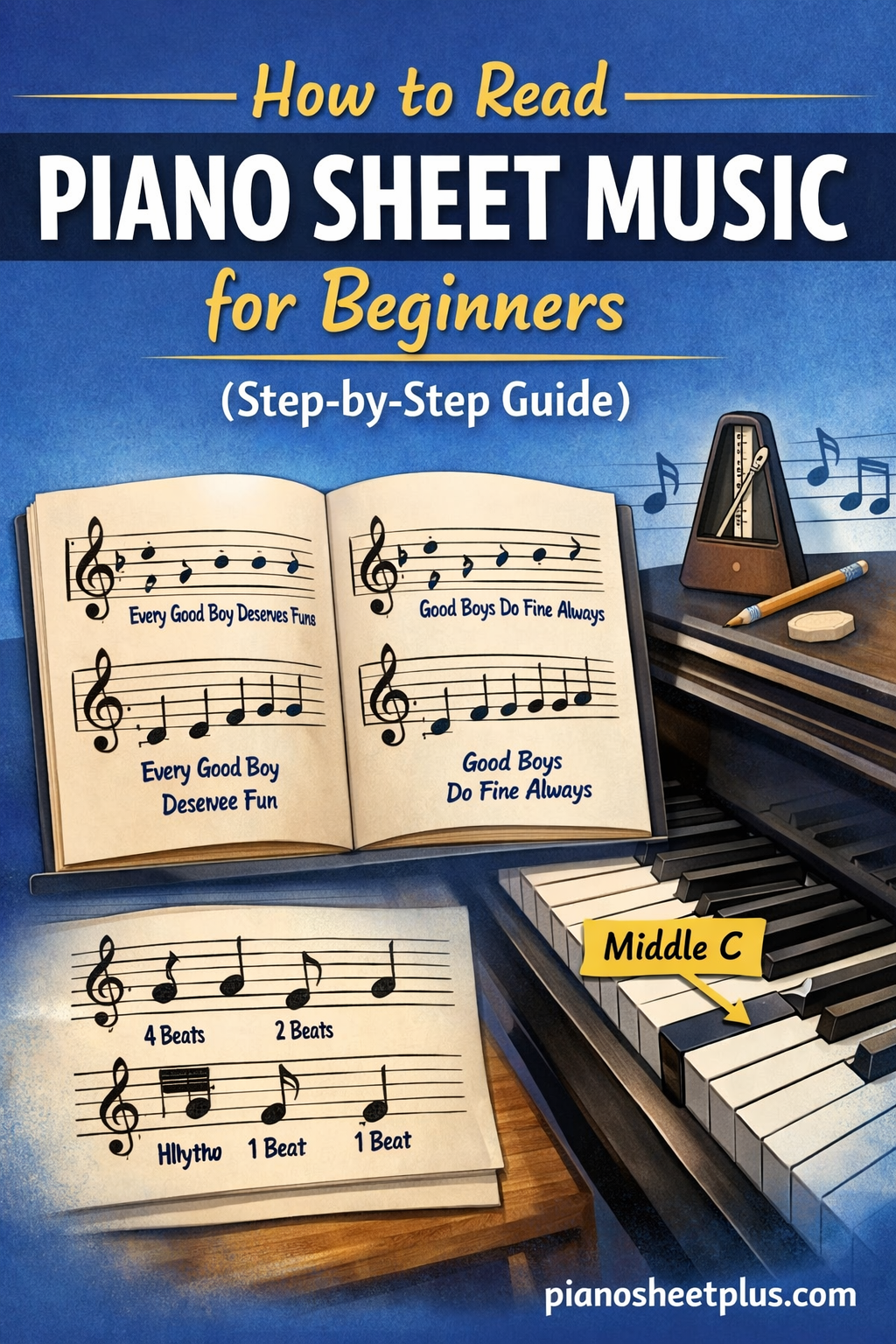
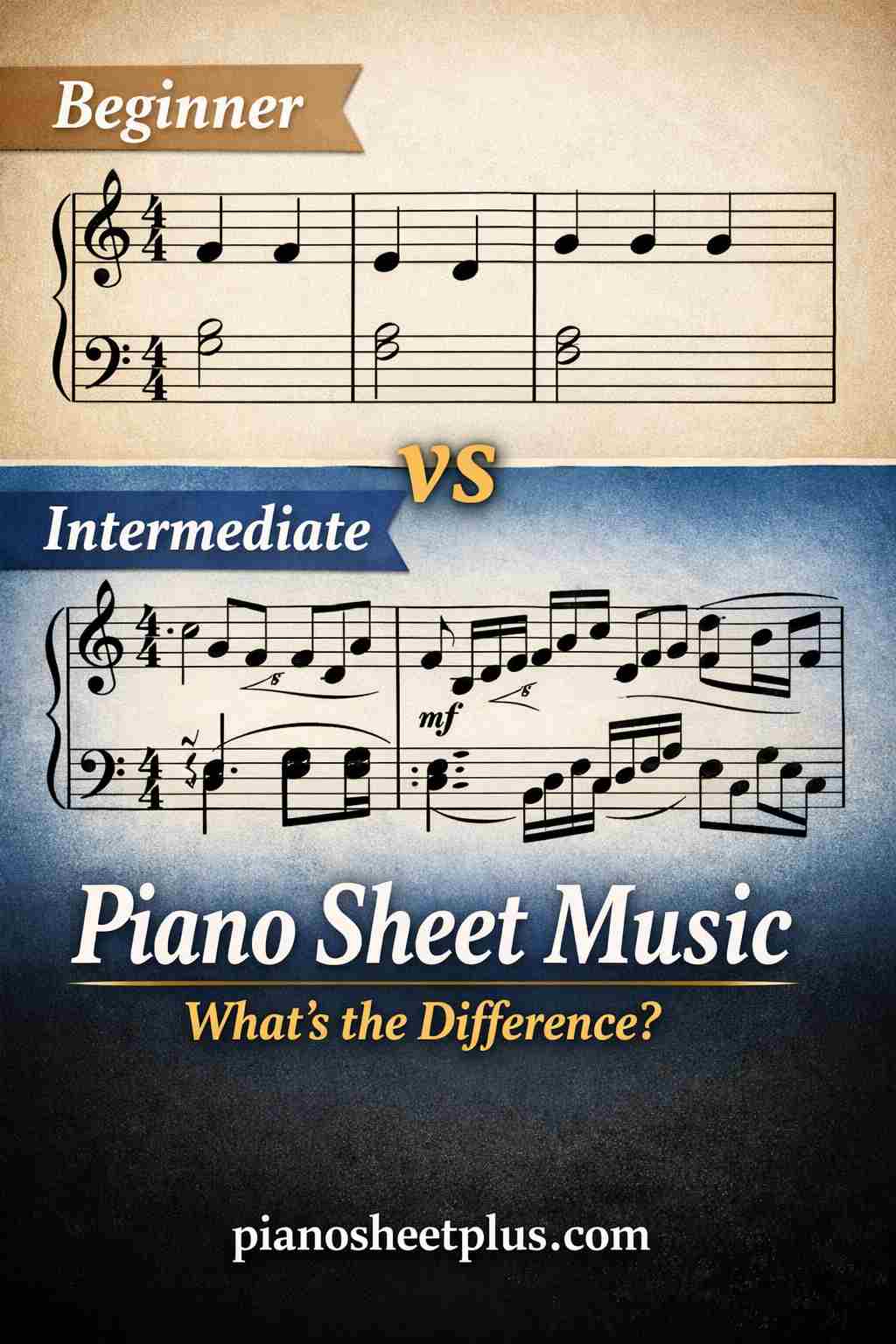
Piano sheet music (often called a piano score) is fully written out for both hands.
It includes:
- Treble clef (right hand)
- Bass clef (left hand)
- Exact rhythms and harmonies
- Dynamics and articulation markings
- Fully arranged accompaniment
In other words:
👉 You do NOT need to create the accompaniment.
👉 Everything is already written for you.
This format is common in:
- Classical repertoire
- Method books
- Beginner piano arrangements
- Formal recitals
- Exam preparation
🎯 Key Differences (Side-by-Side Comparison)
| Feature | Lead Sheet | Piano Sheet Music |
|---|---|---|
| Melody | Written | Written |
| Chords | Symbols only | Fully written harmony |
| Left Hand | Not written | Fully notated |
| Arrangement | You create it | Already arranged |
| Skill Needed | Chord knowledge required | Reading skills required |
| Common In | Jazz / Pop | Classical / Beginner books |
👩🏫 Which One Is Better for Beginners?
This is where many people get confused.
If You Are a True Beginner:
Start with piano sheet music.
Why?
Because you are still learning:
- Staff reading
- Hand coordination
- Rhythm
- Basic technique
You need structure.
If You Already Know Basic Chords:
You can start using lead sheets.
Lead sheets help you:
- Develop creativity
- Understand harmony
- Improve improvisation
- Play by ear faster
🎵 Example Scenario
Imagine you download “Twinkle Twinkle Little Star.”
Lead Sheet Version:
- Single melody line
- Chords: C – F – G – C
- You decide how to play those chords
Piano Sheet Version:
- Right hand melody written
- Left hand broken chords written
- Dynamics included
One requires interpretation.
The other provides instruction.
💡 From a Teacher’s Perspective
In my teaching studio, I introduce:
- Piano sheet music first (for reading foundation)
- Then gradually add lead sheets
- Later, students combine both for flexibility
Students who only learn full piano sheet music often struggle with:
- Playing in bands
- Improvising
- Playing from chord charts
Students who only use lead sheets often struggle with:
- Reading complex rhythms
- Classical repertoire
- Technical development
Balance is key.
🎼 When Should You Use Each?
Use Lead Sheets If You:
- Want to play pop songs quickly
- Sing while playing
- Play in church or band
- Like improvising
- Understand chord construction
Use Piano Sheet Music If You:
- Are preparing for exams
- Want to play classical music
- Prefer fully written arrangements
- Are still learning how to read
🧠 Final Summary
Lead sheet = Framework + Freedom
Piano sheet music = Structure + Detail
Neither is “better.”
They serve different musical goals.
If you’re building strong fundamentals, start with piano sheet music.
If you’re expanding into creativity and harmony, explore lead sheets.
The strongest pianists learn both.