Contents
- 1 How to Learn Piano Step by Step: Your Complete Beginner Roadmap from Zero to First Song
- 1.1 Before You Touch the Keys: Two Things That Actually Matter
- 1.2 Step 1 — Learn the Piano for Beginners: The Keyboard Layout
- 1.3 Step 2 — Train Each Hand Separately (This Is Not Optional)
- 1.4 Step 3 — Basic Music Theory as You Go (Not Before)
- 1.5 Step 4 — How to Practice Piano as a Beginner (The Part Nobody Talks About)
- 1.6 Step 5 — Playing Your First Complete Song
- 1.7 Frequently Asked Questions: Learning Piano from Scratch
- 1.7.1 How long does it take to play your first song on piano?
- 1.7.2 Do I need to learn to read sheet music to play piano?
- 1.7.3 What’s the best first song to learn on piano as a beginner?
- 1.7.4 How many minutes a day should a piano beginner practice?
- 1.7.5 Do I need a real piano or can I learn on a keyboard?
- 1.7.6 What’s the hardest part of learning piano as a complete beginner?
- 1.8 One Last Thing Before You Sit Down
How to Learn Piano Step by Step: Your Complete Beginner Roadmap from Zero to First Song
A student named Marcus came to me after six months of trying to learn piano on his own. He could play about twelve seconds of “River Flows in You” — the same twelve seconds, over and over, slightly differently each time. He’d never once played it the same way twice. When I asked him what he’d been practicing, he said: “Everything, I think.”That’s the problem with starting without a roadmap.
If you’re an absolute beginner trying to learn piano, the sheer amount of advice out there is paralyzing. Start with scales. No, start with songs. Learn to read music first. Actually, chords are more practical. Twenty YouTube channels, twenty different answers.
After two decades of teaching students from age five to seventy-two, I can tell you: there is a clear, logical order to learning piano from scratch. It’s not magic and it’s not complicated. It’s just a sequence — and when you follow it, things that seemed impossible start clicking into place faster than you’d expect.
This is that sequence. A step-by-step beginner piano roadmap built around one goal: getting you from zero to your first complete song, played with both hands, at a steady tempo, without stopping.
Before You Touch the Keys: Two Things That Actually Matter
Most beginner piano guides skip this part and go straight to notes. I won’t, because I’ve seen it cause problems too many times.
Your posture is a long-term investment
Sit so that your elbows are roughly level with the keys — not higher, not lower. Back straight, shoulders dropped and relaxed. Your fingers should curve naturally, like you’re holding an invisible orange. The fingertips — not the flat pads — make contact with the keys.
This sounds fussy for a beginner. It isn’t. Bad posture is one of those things that feels fine for six months and then suddenly causes wrist pain or a hard ceiling on your technique that’s almost impossible to break through. I’ve spent many painful hours helping adult students unlearn posture habits that took root in week one. Get it right early and you’ll never have to think about it again.
Understand what you’re actually practicing toward
Before your first session, pick a specific song you want to learn. Not a “good beginner song” someone else chose. A song you actually care about. It doesn’t matter if it seems too hard right now — a simplified arrangement exists for almost everything. That song is your north star. When the exercises get dull (they will), knowing what they’re building toward makes all the difference.
Step 1 — Learn the Piano for Beginners: The Keyboard Layout
Week 1
The piano keyboard is more logical than it looks. There are only twelve unique notes, and they repeat across the whole instrument in the same pattern. The white key in the middle of any group of two black keys is always D. The white key just to the left of any group of two black keys is always C. Find those two and the rest follows.
Spend your first few sessions just finding notes by name — not playing melodies yet, just locating. C, D, E, F, G, A, B. Say them out loud as you press them. Your brain is building a map, and the more senses you involve, the faster it sticks.
Think of it like learning a city. You don’t memorize every street on day one. You find the train station, the market, the park. Then everything else starts to make sense relative to those landmarks. Middle C is your train station.
What about sheet music?
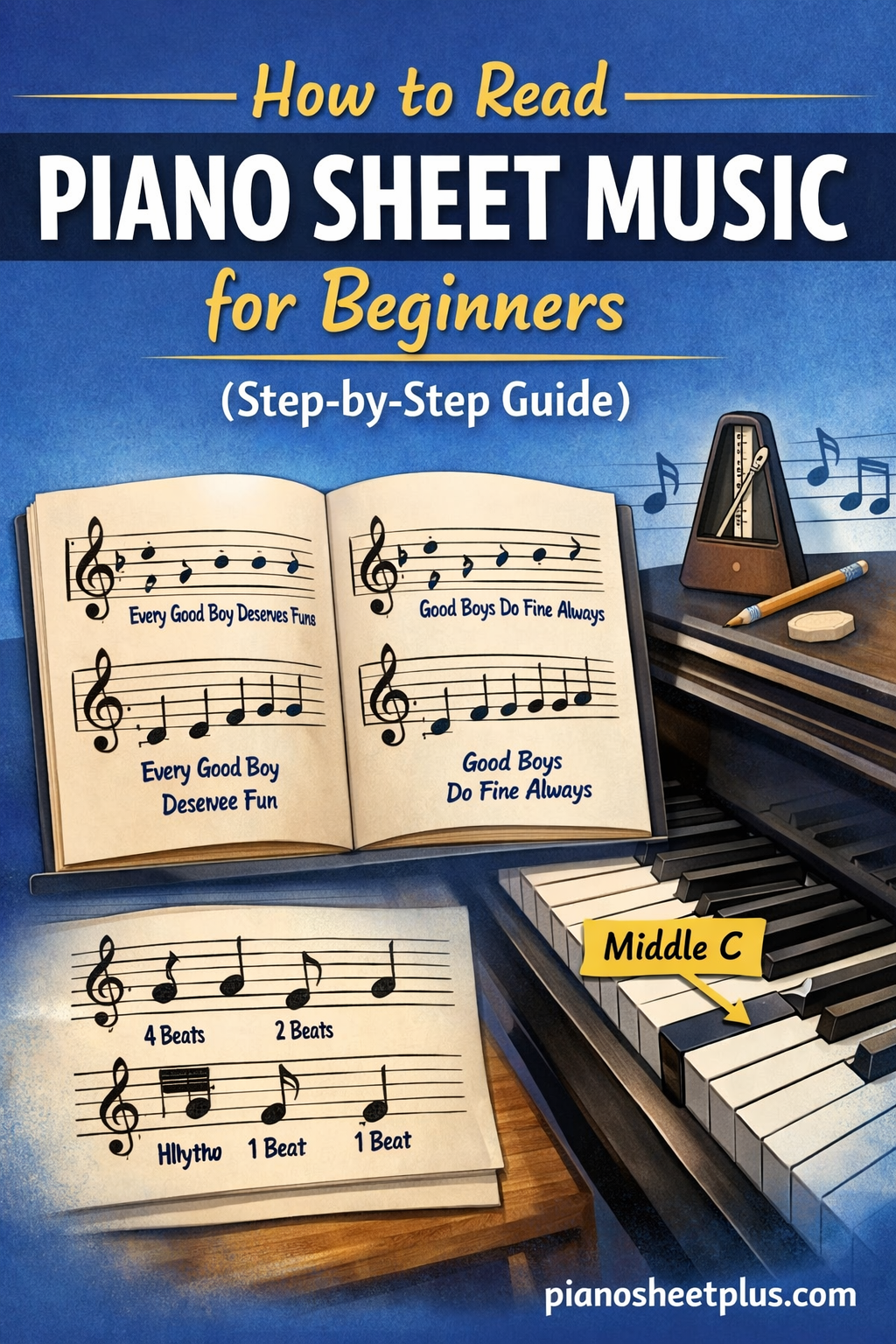
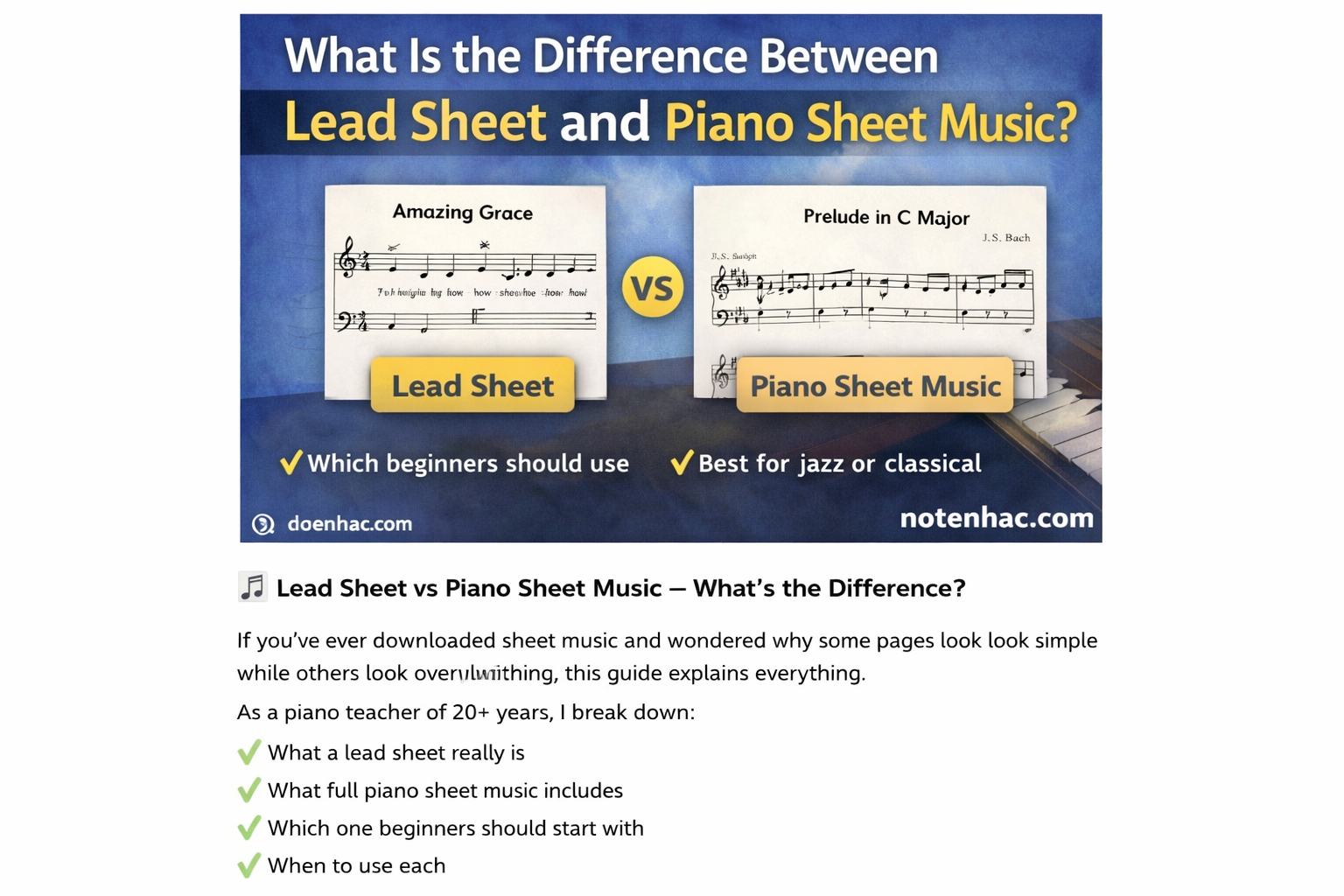
You don’t need to read sheet music to start playing piano. I want to say that clearly, because the idea that you must learn notation before you can play anything stops a lot of beginners dead in their tracks. Reading music is a skill you build alongside playing, not a prerequisite for it. In these early weeks, focus on the keys. The notes on the page can come gradually.
Step 2 — Train Each Hand Separately (This Is Not Optional)
Weeks 2–4
Here is where most self-taught beginners make the mistake that costs them months. They learn a melody with their right hand, get comfortable with it, and then immediately try to add the left hand. The result is chaos — both hands fall apart, frustration spikes, and the beginner concludes they’re just “not coordinated enough.”
They are coordinated enough. They just skipped a step.
Right hand first — melody
Start every new piece or exercise with the right hand alone. Play it slowly enough that every note is deliberate and correct. Not fast-and-sloppy. Slow-and-clean. Speed is a byproduct of accuracy, not the other way around. Play the right hand until it genuinely feels boring — until your fingers know where to go without your brain having to chase them.
Left hand second — harmony and bass
Then do exactly the same with the left hand in isolation. For most beginner piano pieces, the left hand plays a simpler pattern — a repeated chord shape, a bass note, a simple accompaniment figure. Learn it the same way: slowly, accurately, until it’s automatic.
Only once each hand can play its part without you thinking hard about it should you put them together. When you do, drop the tempo by half. Your brain is now managing two independent streams of motor activity simultaneously — give it the processing time it needs.
Step 3 — Basic Music Theory as You Go (Not Before)
Ongoing from Week 2
I’m not going to tell you to ignore music theory. It matters. But there’s a world of difference between learning theory in context and sitting down with a workbook before you’ve played a single chord.
When you learn your first left-hand pattern, learn what chord it is. C major. Three notes — C, E, G. When you learn your second chord, notice the difference. When you first encounter a dotted rhythm, understand what that dot means before you try to play it. Theory learned this way doesn’t feel like theory — it feels like explanations for things you’re already experiencing.
The four chords that unlock most popular songs
If your goal is to play songs rather than classical repertoire, here’s a practical shortcut: learn the four chords C major, G major, A minor, and F major. A large percentage of popular songs — including many that seem complex — are built on some combination of these four. Learn them until you can move between them without hesitation, and your usable repertoire expands dramatically overnight.
Learning chords before complex theory is like learning to cook a few dishes before studying food chemistry. One makes dinner. The other is fascinating but won’t feed you tonight.
Step 4 — How to Practice Piano as a Beginner (The Part Nobody Talks About)
Every day
Twenty to thirty minutes every single day beats two hours every Sunday. This isn’t motivational advice — it’s how motor skill acquisition actually works. Your brain consolidates new physical patterns during sleep. Daily practice means daily consolidation. Weekend-only practice means you spend half of Sunday rebuilding what you lost during the week.
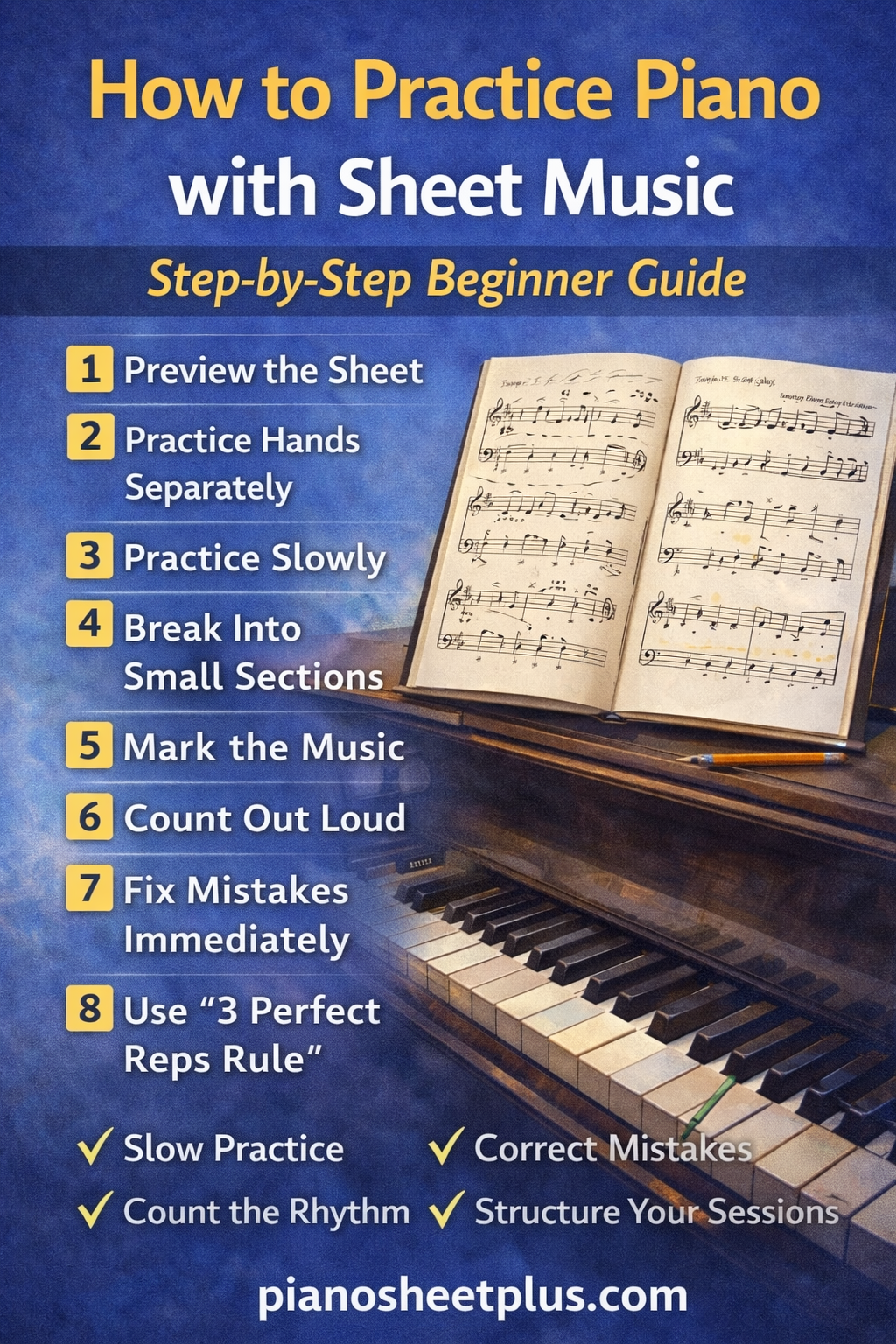
Structure those daily sessions the same way every time. Start with a short warm-up — a simple five-finger exercise, hands separately. Then work on the hardest section of whatever you’re learning, not the easiest. Beginners instinctively avoid the hard parts and rehearse the easy bits they already know. That’s emotionally satisfying but technically useless. End with something fun — a section you can already play decently, or a run-through of whatever you’re close to finishing.
Use a metronome, even if you hate it
Everyone hates the metronome at first. I hated it. My students hate it. It feels mechanical and unmusical. But uneven rhythm is the hardest habit to unlearn, and it compounds — bad timing at the beginner stage becomes unfixable bad timing at the intermediate stage. Start slow enough that every note lands exactly on the beat. Sixty BPM is not embarrassing. It’s how good players learn hard things.
Record yourself once a week
You don’t need equipment — your phone propped against a stack of books is enough. Play back the recording after. You will hear things you cannot hear while playing. Wrong notes you’ve been playing correctly in your head. A left hand that’s slightly ahead of the right. A section where your tempo rushes. The recording doesn’t lie, and that’s exactly why it’s useful.
Step 5 — Playing Your First Complete Song
Month 2–3
The goal isn’t perfection. The goal is completion — a full run-through of your chosen song, both hands together, at a consistent tempo, without stopping to fix mistakes mid-song. That milestone matters more than you’d think. It rewires how you see yourself: from someone learning piano to someone who plays piano. That shift in identity carries you through the harder work ahead.
When you’re close to performance-ready, practice the transitions more than the sections. The beginning of a piece, the chorus, the ending — those feel fine because you’ve rehearsed them most. It’s the seams between sections, the moment after a chord change, the pickup into the second verse — those are where the cracks show. Drill the joints, not the planks.
Frequently Asked Questions: Learning Piano from Scratch
How long does it take to play your first song on piano?
Most beginners can play a simple complete song with both hands within 6 to 10 weeks of consistent daily practice — roughly 20–30 minutes per day. The timeline depends heavily on the difficulty of the song chosen and how consistently you practice. A simplified version of a familiar song is achievable earlier than that.
Do I need to learn to read sheet music to play piano?
Not as a prerequisite. Many beginners learn songs by ear, by chord charts, or through apps before they read traditional notation. That said, learning to read music eventually opens up a much larger repertoire and makes learning new songs faster. Build it gradually alongside your playing — not instead of it.
What’s the best first song to learn on piano as a beginner?
The best first song is one you genuinely want to play, not one someone else decided is “appropriate for beginners.” That said, good early choices tend to be songs with a clear, singable melody in the right hand and a simple repeated pattern in the left — Für Elise (opening section), River Flows in You (simplified), or any folk or pop song you know well enough to hear in your head.
How many minutes a day should a piano beginner practice?
Twenty to thirty minutes of focused daily practice is enough for most beginners, and consistently outperforms longer but infrequent sessions. The key word is daily — the brain consolidates new motor skills during sleep, so regular short sessions are more effective than occasional long ones. If life gets busy, even 15 focused minutes is better than nothing.
Do I need a real piano or can I learn on a keyboard?
You can absolutely start on a digital keyboard, but it should have weighted or semi-weighted keys — 88 keys is ideal, 61 is workable for early stages. Unweighted keys (like a basic MIDI controller or cheap mini keyboard) develop finger technique that doesn’t transfer well to a real piano. A decent weighted digital piano in the 5–10 million VND range is enough to get you through the first year and beyond.
What’s the hardest part of learning piano as a complete beginner?
Without a doubt: getting both hands to play independently at the same time. It’s not a coordination problem — it’s a brain-load problem. The solution is to learn each hand until it’s nearly automatic before combining them, and to drop the tempo significantly when you first put hands together. Most beginners rush this step. The ones who don’t progress noticeably faster.
One Last Thing Before You Sit Down
Marcus — the student I mentioned at the beginning — finished his first complete song about nine weeks after we started working on a proper roadmap. It was a simplified arrangement of a film piece he’d loved for years. He played it through twice at our lesson, both hands, tempo steady, no stops. Then he sat quietly for a moment.
“That’s the first time I’ve ever actually finished something,” he said.
That’s what a roadmap does. It doesn’t make piano easy — nothing does. But it turns a vague, overwhelming, frustrating pursuit into a sequence of achievable steps. And there’s a world of difference between not knowing how to learn piano for beginners and simply being at step two of a five-step process.
You’re not behind. You’re at step one. That’s exactly where you should be.